
Today, Affiliate marketing is one of the fastest and affordable techniques to make money online. An attractive source of passive income for you If you are a blogger, content creator, or have the desire to be your own boss, there is potential in employing affiliate marketing for a steady stream of future income. But for newcomers, inquiries such as “Is affiliate marketing legit?”, “Is it possible to make $100 per day with affiliate marketing?” or “What niche is most profitable for affiliate marketing?” often arise.
If you’ve been interested but have no idea how to begin or if you’ve seen phrases such as puma affiliate marketing program or pinterest affiliate marketing amazon and have cocked your head thinking, what does all this mean? This blog is for you.
Once you’re through with this guide, you will not only have a 100% grasp on what affiliate marketing is, but also how to get started, how to avoid the common affiliate marketing pitfalls, and set the groundwork for lasting success. Let’s jump right in!
What is Affiliate Marketing?
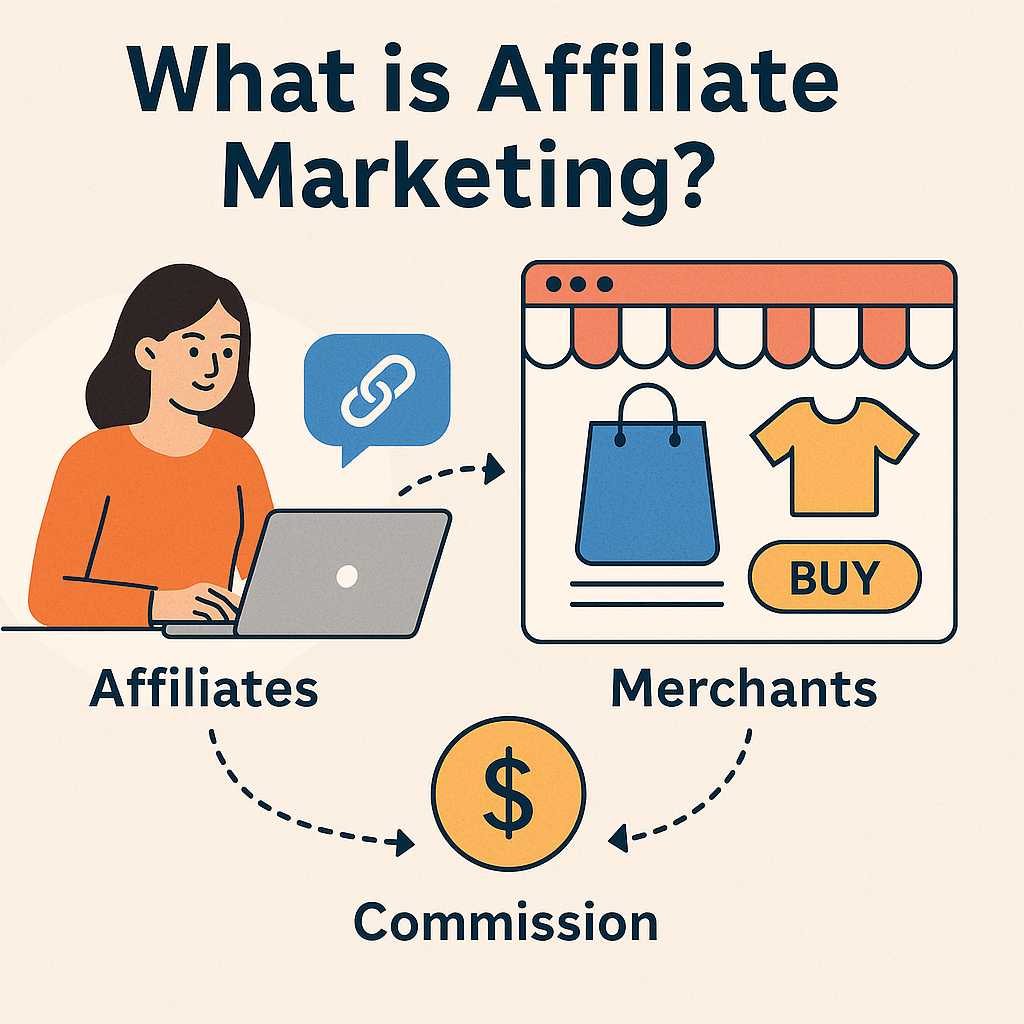
Performance-based marketing Affiliate marketing is a model in which people (affiliates) earn a commission by promoting the products or services of other companies (merchants). Affiliates promote special affiliate links on their blog, social media, or email networks. The affiliate makes a commission for every sale generated through their link.
Is Affiliate Marketing Legit?
One of the most frequently asked questions is: “Is affiliate marketing legit?” The short answer is yes. Affiliate marketing is a realistic method to earn money on the internet. Amazon Associates and the Puma Affiliate Marketing Program are established options with an Affiliate offer, and affiliates can earn commissions by promoting this offer.
How Does Affiliate Marketing Work?
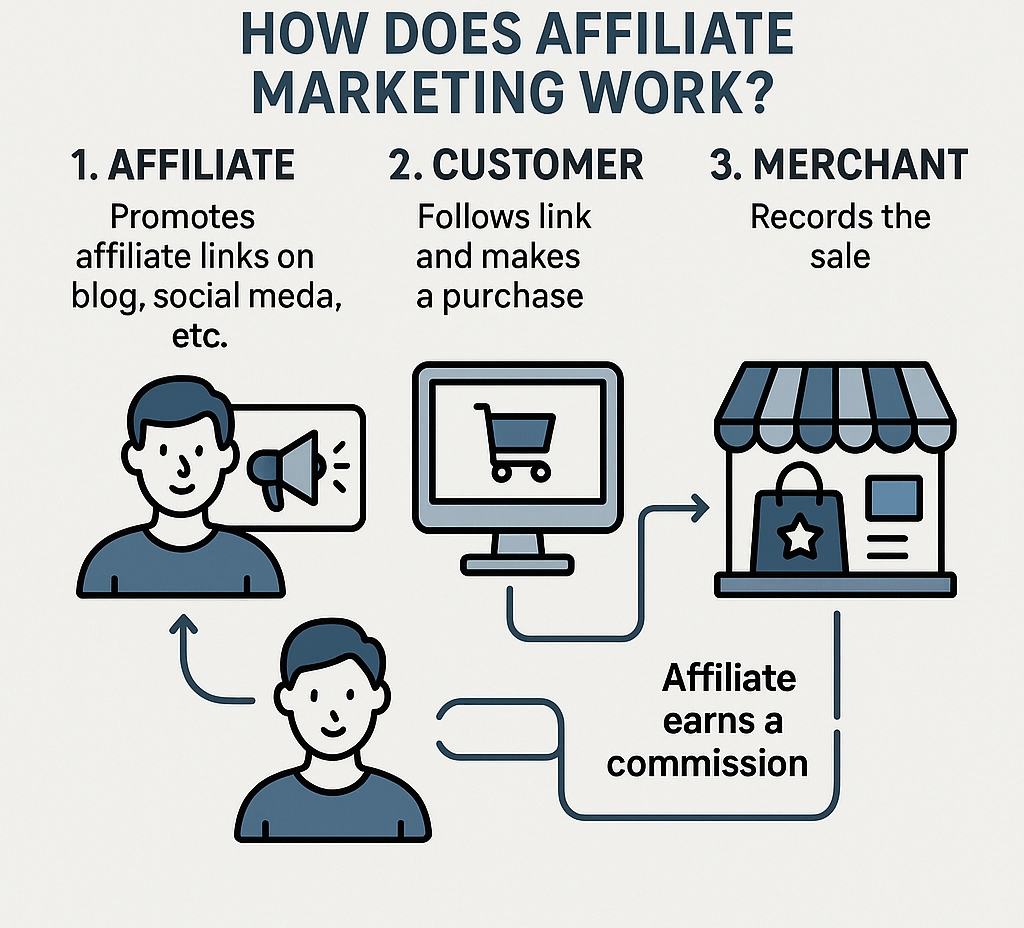
The affiliate, merchant, and customer are the most common participants in affiliate marketing. It starts when a store creates an affiliate program to sell their product and gets more people to promote their product. Associates subsequently join those programs and earn distinctive tracking links to pinpoint sales from others.
They do this by creating content on blogs, social media, or even doing product reviews on YouTube that promote the merchants products. A customer follows an affiliate’s link and makes a purchase; the merchant registers this transaction and associates it with the affiliate. The affiliate gets paid based on the sold price (at a percentage of the sale or a fixed amount per referral).”
This is a win-win model for all the stakeholders. For merchants, this model means that they receive the benefit of brand exposure and sales without having to pay the upfront costs for advertising; affiliates get passive income, and the customer gets the value of a useful product/service that comes with trusted advice.
What’s fantastic about affiliate marketing is that it’s really simple and scalable. You don’t have to come up with your product or manage inventory. Instead, you’re a virtual connector, matching people with solutions they’re already in the market for.
Some Affiliate Marketing Fast Facts:
- It’s a $12 billion-per-year industry worldwide.
- Amazon’s “Amazon Associates”, their affiliate marketing program, is one of the most popular for bloggers and influencers.
- Affiliates like The Wirecutter have become multimillion-dollar content empires on affiliate revenue.
Now that you’re intrigued, how does the magic actually happen?
Understanding the Role of an Affiliate
To be a successful affiliate marketer, it makes sense to begin with an understanding of the structure.
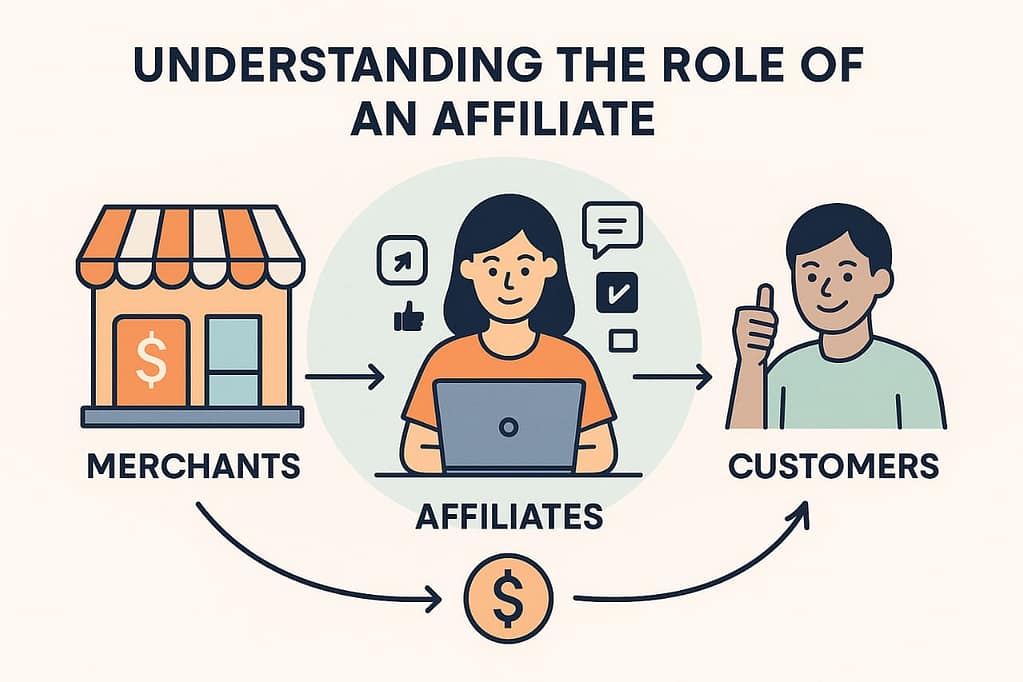
The three main roles in any affiliate program:
Merchants
These are companies or businesses that provide a product or service. High-profile examples include Amazon, Puma or smaller businesses seeking to penetrate new markets/segments.
Affiliates
They are people like you, a content creator, blogger, or influencer on social media who direct potential purchasers to the merchant’s site from their promotions.
Successful affiliates include platforms like:
- NerdWallet (financial products)
- Pat Flynn’s Smart Passive Income (affiliate marketing & strategies)
Customers
The fuel of affiliate marketing. A customer buys something because of what you say, and people buy revolvers through your recommendation. The happier your customers are, the better you can convert.
Knowing how these three parties play together provides a blueprint for you to customize your content and strategies.
Absolutely, but your success depends on several factors:
- Your Niche
- The volume of traffic that you send to your links
- Rate of conversion (number of people who purchase after clicking your link)
Examples of successful visions are:
The Wirecutter – famous for its hyper-informative product reviews.
NerdWallet – Makes money from product recommendations (credit cards and loans).
Pat Flynn’s Smart Passive Income -publishes reports about his income and strategies, demonstrating what’s possible with ethical affiliate marketing.
Finding Your Niche
Choose the right niche. You should begin by finding a profitable niche. But here’s the catch—not all niches are created equal!
What is a niche?
A niche is your area of focus. Instead of appealing to everyone, you target a specific audience. This makes it easier to create content, build a following, and make sales.
Why is finding your niche important?
Finding your niche allows you to:
- Establish yourself as an expert in a specific area
- Create targeted content for your audience
- Build authority and trust with your followers
- Stand out from the competition in a saturated market
When choosing your niche, consider these factors:
- Your interests and passions – What topics are you knowledgeable about or interested in?
- Market demand – Are people actively searching for information or products related to your chosen niche?
- Competition – Is the market oversaturated with other affiliate marketers targeting the same niche?
Researching and understanding these factors.
How to Choose the Right Niche

Selecting the right niche is a critical step that can determine the success of your affiliate marketing efforts. Start by identifying your passions and interests—what topics do you enjoy learning or talking about? When you’re genuinely interested in a subject, creating engaging and authentic content becomes much easier.
Next, research the market demand for your chosen niche. Are people actively searching for products or solutions within this area? Tools like Google Trends or keyword research platforms can help gauge popularity and competition levels. Ideally, you should aim for a niche that’s not overly saturated but still has a sizable audience.
Lastly, evaluate the profitability of the niche. Consider whether there are quality affiliate programs available with reasonable commission rates. A combination of personal interest, market demand, and profitability will set you up with a niche where you can thrive and build a loyal audience.
Why is a niche critical?
- Reduces competition
- Let you build authority
- Attracts a loyal following
The Best Niches for Affiliate Marketing
- Health & Fitness – From supplements to fitness gear, this evergreen niche thrives year-round.
- Personal Finance – High commissions for credit cards, loans, or investment products. (Case in point: NerdWallet).
- Technology and Gadgets – Think cameras, laptops, and accessories.
- Fashion/Lifestyle – Programs like the Puma affiliate marketing program offer opportunities for sports and athleisure lovers.
- Home Décor – Endless options on platforms like Amazon Associates.
Pro Tip: Validate your niche by researching trends using Google Trends or Pinterest. For instance, Pinterest affiliate marketing Amazon is popular because of Pinterest’s visual and search-friendly nature.
Researching Affiliate Programs
Not all affiliate programs are equal. The right program can either pave the way for massive success or leave you frustrated.
Here are some top platforms:
- Amazon Associates – Beginner-friendly with a vast product selection but lower commissions.Popular among digital product creators, but the quality of products can vary.
- ClickBank – Known for high-commission products across various industries.
- Puma Affiliate Marketing – Specifically great for fashion or athletic-focused creators.
- ShareASale – Offers a mix of physical and digital products with varying commission rates.
- CJ Affiliate (formerly Commission Junction) – Large network with well-known brands but can be difficult to get accepted into.
Choosing the Right Products
Choosing the right products to promote is crucial for your success as an affiliate marketer. Here are some factors to consider:
- Relevance – The product should align with your niche and target audience.
- Quality – It’s important to promote high-quality products that you genuinely believe in. This will help establish trust with you.
When researching, consider:
- Commission Rates – Does it fit your income goals?
- Cookie Duration – How long do you get credit if a customer doesn’t purchase immediately?
- Products You Believe In – Authenticity matters! Promote products you trust.
Building a Content Strategy
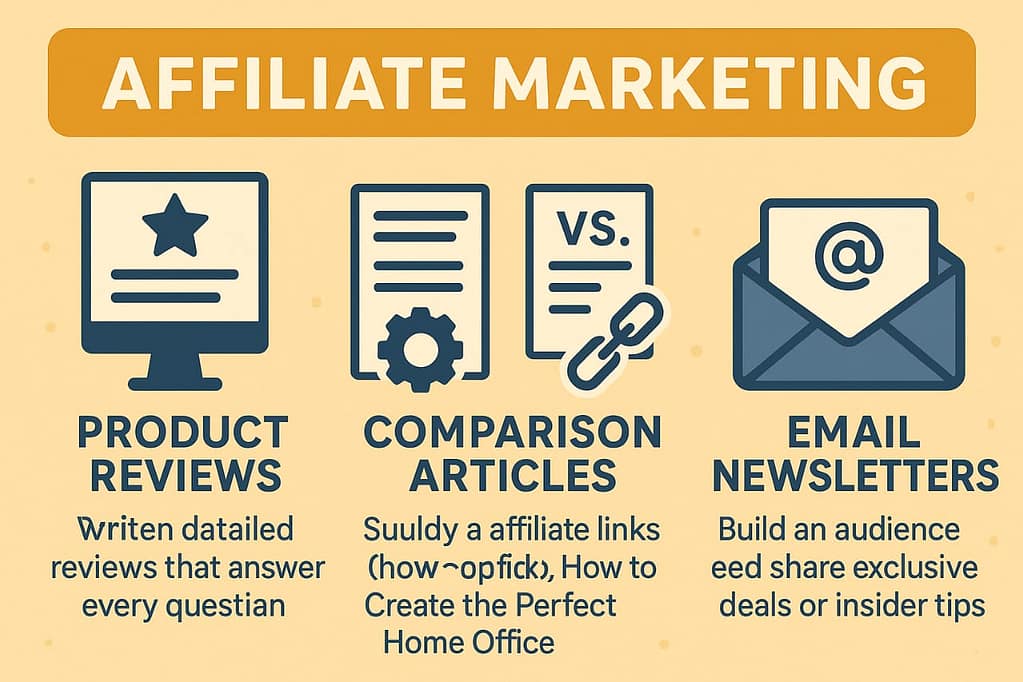
Content is king in affiliate marketing. The more engaging and authentic your content, the better your chances of converting readers into buyers.
Content Types to Consider:
- Product Reviews – Example: The Wirecutter is a master at writing detailed reviews that answer every question a buyer might have.
- Comparison Articles – Example: “Cow’s Milk vs. Almond Milk” or “Best Budget Laptops for Students.”
- How-To Guides – Include affiliate links subtly. Example, “How to Create the Perfect Home Office (with Amazon Picks).”
- Email Newsletters – Build an audience and share exclusive deals or insider tips with your readers.
Always ensure content quality remains high with proofreading tools like Outwrite.
Getting Traffic to Your Affiliate Links

Content itself is not going to drive prospective visitors to your affiliate links. You do need to generate traffic, otherwise it is pretty much all in vain. Some strategies include:
Organic Traffic
- Create SEO-optimized articles targeting keywords, for example: affiliate marketing jobs, and is affiliate marketing legit.
- Create content that lasts over time or is evergreen (something that will continue to rank, for example: a product review).
Social Media Traffic
Platforms like Pinterest offer massive opportunities for affiliate links (ex., Pinterest affiliate marketing, Amazon)
Paid Traffic
Put ads to the service of campaigns and to promote some high-converting pages. Great starting points are services like Google Ads or Meta (Facebook) Ads.
How to Measure and Improve Your Results
“Affiliate marketing is not a ‘set-it-and-forget-it’ channel.” To maximize your success:
Measure What Works -Monitor Your Performance with Google Analytics to see which content is generating the most clicks.
Split Test Landing Pages – a method where two or more versions of a landing page are compared to determine which performs better in achieving a specific goal, such as increasing conversions or improving engagement. It involves randomly assigning traffic to different versions of the landing page and tracking metrics like conversion rates and clicks. Test a different call to action (CTA) or a headline.
SEO Enhancements – Refine old content to incorporate new keywords or products with better conversions.
By tweaking your strategy as you go along, you can increase or decrease how much you make for your monthly investment.
Common Mistakes to Avoid

Spamming Affiliate Links – Remember that content is king. Links should complement the reader’s experience, not act as a takeover.
Disregarding Disclosures- Transparency is key. Most countries will ask you to disclose affiliations.
Biaising Products That Are Not Relevant – If the product isn’t relevant to your followers, you will lose credibility.
Avoiding these pitfalls ensures your reputation as an affiliate marketer remains solid.
Why The Concept Of Affiliate Marketing Is Here To Stay
The future of affiliate marketing is promising. Social media has exploded, AI has come into its own as a content generation tool, and more affiliate programs are springing up every day, which means there’s greater opportunity than ever.
Don’t forget: affiliate marketing is not a “get rich quick” scheme. But with the right niche, tools, and strategies, you’ll be able to not only answer those kinds of questions with a “Yes!” (Can you make $100 a day with affiliate marketing? Yes!) but even scale beyond it.
Has this guide motivated you to give affiliate marketing a shot? Begin with one of these actionable steps today. Pick a niche, join an affiliate program, and start writing value-focused content. But don’t stop there.
If you are interested in the dark web, you can read How to Safely and Responsibly Use the Dark Web




[…] A Beginner’s Guide to Affiliate Marketing for 2025 […]